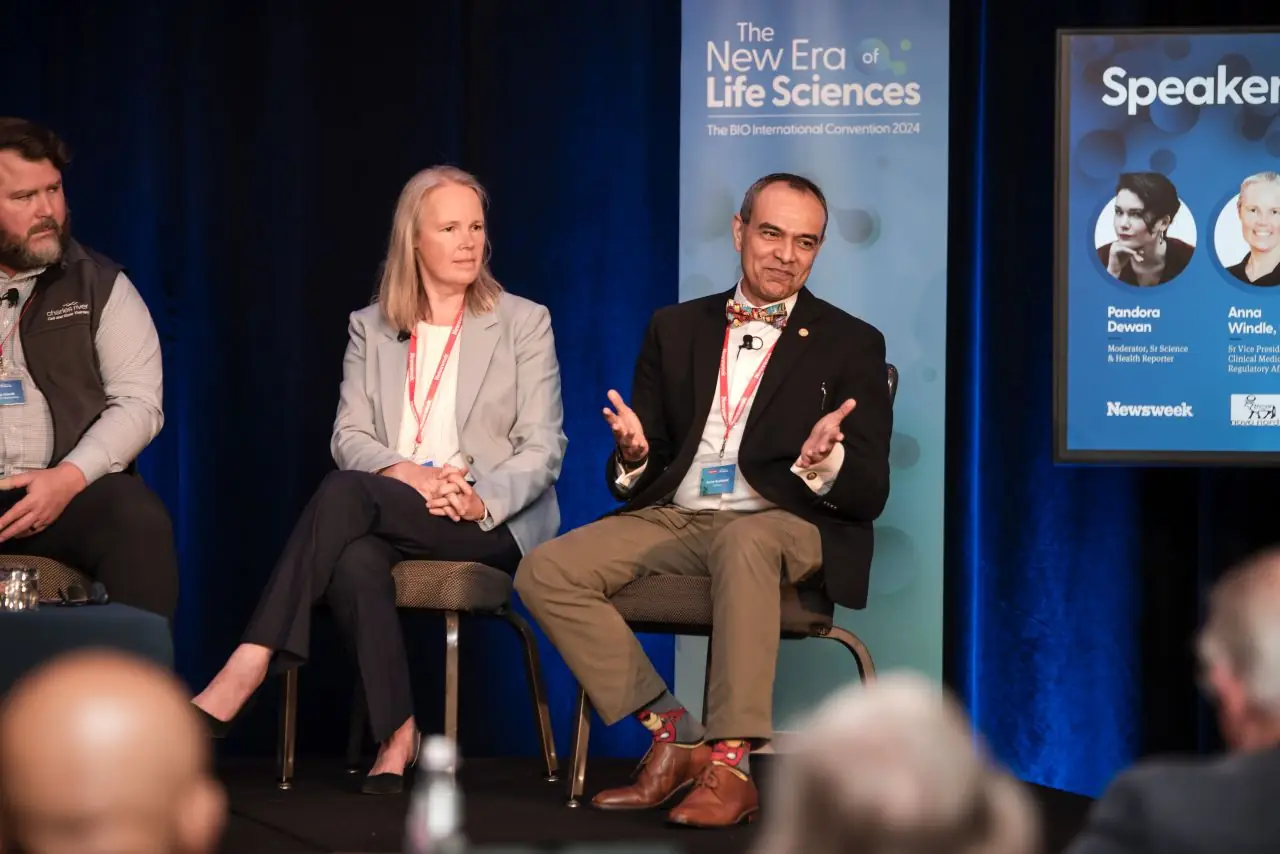
MONTGOMERY, Alabama – When Dr. Karim Budhwani leads a discussion session at BIO International’s annual conference in San Diego next week, he’ll be wearing his signature Iron Man bow tie along with a “Made in Alabama” pin on his lapel.
Budhwani is co-founder and CEO-scientist at Birmingham-based CerFlux, a biotech company focused on developing precision oncology technologies to “crush cancer” by matching treatments to tumors.
His panel on New Approach Methodologies in cancer treatment research will again put Budhwani and the pioneering personalized medicine work underway at CerFlux before a worldwide audience of biotechnology leaders. It’s also another opportunity to promote Alabama’s bioscience innovation and ecosystem.
“We are trying to showcase that we are not tourists in the biotech sector,” said Budhwani, who is also chair of the board for BIO Alabama, the statewide bioscience trade association.
“We are the hosts. We are the tour guides,” he said. “And that’s very, very important that we do that, because we need to show that we have the appropriate ecosystem here for people to come in and make investments.”
In addition to his other roles, Budhwani is faculty at the University of Alabama at Birmingham, where he received a master’s degree in biomedical engineering and a PhD in materials science and engineering.
This will be Budhwani’s fifth consecutive year leading a panel at BIO International, a four-day event for bioscience experts and industry leaders. More than 20,000 participants from around the world are expected.
Budhwani’s panel discussions on personalized precision oncology at BIO International have repeatedly drawn capacity audiences, with some sessions requiring added seating and even overflow space.
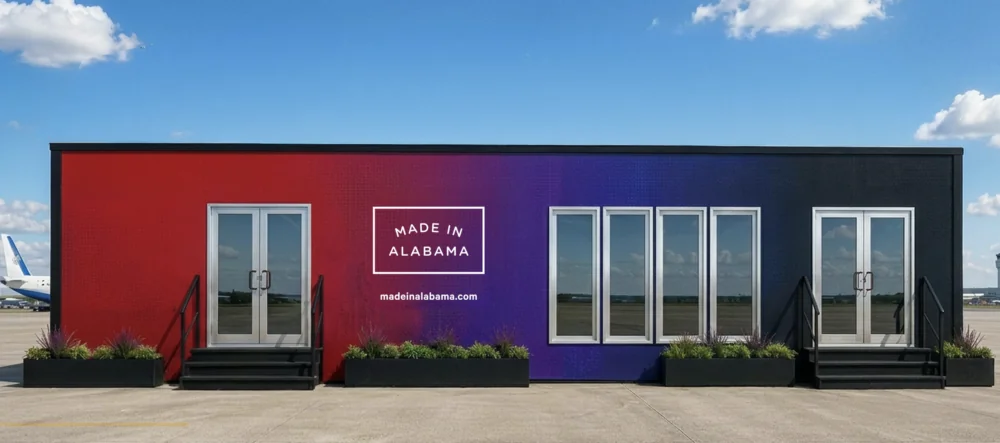
At previous conferences, Alabama’s presence was smaller, Budhwani said. Now, he can point his international colleagues to the Alabama Department of Commerce team and a booth where the state’s bio-sector stats will be on display:
An annual economic impact of $6.4 billion;
2025 National Institute of Health funding totaling $351.6 million;
1,551 bioscience establishments in the state – and growing;
Cummings Research Park in Huntsville, the second-largest research park in the country and the fourth largest in the world.
“Alabama is not sleeping on the bio and biotech sectors, and we want companies and institutions everywhere to know there are opportunities here,” said David Sides, an International Project Manager in Commerce’s Office of Global Business.
Sides, along with colleague Alex Cate, Senior Project Manager for Bioscience and Biotechnology, is co-managing Alabama’s delegation to BIO International this year.
“BIO International gives us a chance to make invaluable connections and highlight what’s possible in Alabama. We have world-class research institutions, a growing bioscience footprint and state commitment to supporting innovation.”
The Alabama team
Along with Commerce and BIO Alabama, the state’s delegation at this year’s conference includes more than 20 educational entities, economic development and community groups and private bioscience-related companies.
They are:
- Alabama Community College System
- Alabama Industrial Development and Training (AIDT)
- Alabama Power Company
- BioGX
- Birmingham Business Alliance
- Celestia Life Sciences
- Cullman Economic Development
- Economic Development Partnership of Alabama (EDPA)
- Gannet BioChem
- HATCH Fairhope
- HudsonAlpha Institute for Biotechnology
- Huntsville-Madison Chamber of Commerce
- Innovate Alabama
- iRepertoire
- Mobile Chamber of Commerce
- OSAZ AI
- Skyang Bio LLC
- Southern Research
- Tennessee Valley Authority
- University of Alabama at Birmingham
- Van Heron Labs
- VivoSphere
“At BIO International, we’ll be showcasing some of Alabama’s leading educational institutions, economic development partners, and home-grown companies that are propelling research and innovation in biotechnology,” Sides said. “Seeing this delegation grow each year is a testament to the state and local communities’ support for this sector and the opportunities available in Alabama.”
San Diego to Scotland
Earlier this month, another biotech company rooted in Alabama stood before a different international audience.
A team from Birmingham-based Reliant Glycosciences presented their research results at the European Renal Association (ERA) 2026 Congress in Glasgow.
Reliant was founded in 2015 as a start-up out of the University of Alabama at Birmingham and based on the research of Dr. Jan Novak. Research has focused on the company’s proprietary testing for biomarkers for an autoimmune disease that affects the kidneys, Immunoglobulin A nephropathy (IgAN). Long-term, IgAN frequently leads to end-stage kidney failure.
The company’s flagship product is the GalD™ Assay, a biomarker tool designed to support research, disease monitoring and the advancement of targeted therapies in IgAN.
The assay was recently used in a study of 245 adults with IgAN, conducted in collaboration with the NIH-sponsored Cure Glomerulonephropathy (CureGN) Network, to identify increased risks of kidney failure. Glomerulonephropathy is a category of kidney diseases affecting the organ’s blood-filtering units.
Reliant’s ultimate goal is to provide patients and physicians a reliable tool to monitor the disease.
“We had a tremendous response to this study at the conference in Glasgow, and we can tell the interest in our test is building. Our next steps are to initiate the process of regulatory approval,” said Dr. Matthew Renfrow, CEO and one of the co-founders of Reliant Glycosciences.
The fact that this month there are Alabama experts on two world stages discussing potentially field-changing research in oncology and kidney diseases is something to be celebrated and built upon, Sides said.
State support
For Budhwani, the state’s support of the bioscience sector has included two Innovate Alabama grants for CerFlux in recent years. Innovate Alabama is a statewide public-private partnership with the goal of growing entrepreneurship, technology and innovation.
Budhwani said initiatives like Innovate Alabama show those outside Alabama that he is not a one-off in the state he’s called home for three decades.
“Alabama is matching innovation dollars and that is a huge signal (to innovators),” Budhwani said. “We didn’t have the signal five years ago.”
He says the state is at a critical stage in expansion into biotech, comparable to 30 years ago, when the state successfully courted Mercedes-Benz to Tuscaloosa County and put the state on its path to becoming a leading producer of automobiles.
“What if we hadn’t invested in the automobile sector in the 1990s? Where would we be today?” said Budhwani, who was named an Alabama Trade Ambassador in 2008 by then-Gov. Bob Riley. “… And just like we did for the automotive industry, we need to know that the quick buck is not around the corner – it’s a marathon and we need to invest in innovation in Alabama.
“We need to be able to stay laser-focused on what the new knowledge economy is going to be like. And then we can lead others by their hand into this new economy.”